
Transportable Home vs Kitset Homes in NZ: What’s the Difference & Why It Matters
If you’re considering building a home in New Zealand and are exploring low-cost options, you’ll have come across terms like prefab, modular, transportable, and kitset. They might be lumped together as low-cost housing options, but they’re each quite different.
To help make sure you find the option that best suits you, we’re breaking down the main build options and exploring why many buyers ultimately lean toward transportable homes.
What Are the Main Home Build Options in NZ?
Modular
Modular homes are constructed in sections, or modules, within a controlled environment. Once the modules are transported to the site, they are assembled on a permanent foundation.
Transportable Homes
Transportable homes are built in an off-site manufacturing facility, then transported to your site as a completed dwelling via road transporter. Once delivered, they’re craned onto prepared foundations and connected to services.
Like modular homes, transportable homes are built in a controlled environment, allowing for faster construction and consistent quality. The key difference is that a transportable home arrives largely complete, with minimal construction required once it reaches your site.
Kitset Homes
Kitset homes are delivered as a package of pre-cut materials for homeowners or builders to assemble on-site. For those with building experience, this can be a great cost-saver. However, kitset homes require significant time and effort to assemble, and the quality of the finished product depends on the skill of the builder.
Prefabricated Homes
Prefabricated homes is an umbrella term that relates to any build where significant portions of the construction happened off-site. Prefab homes includes modular, transportable and kitset homes.
Transportable Home vs Kitset Homes
Although kitset homes can be an attractive financial option at first glance, it doesn’t take much digging to see that they’re not quite as cheap as they first appear. By the time you’ve ‘upgraded’ your flooring, glazing and fittings to something you’d be happy to live with, the cost starts to jump up.
Here are some of the other ways the two options stack-up against each other.
|
Aspect |
Transportable Homes |
Kitset Homes |
|
Build Location |
Built entirely off-site |
Delivered as parts |
|
On-Site Work |
Minimal |
Intensive |
|
Quality Control |
Very high |
Variable |
|
Weather Delay Risk |
Low |
Higher |
|
Labour Requirement |
Low |
Buyer-dependent |
|
Warranty / Guarantees |
Typically robust |
Variable |
Read more about the many reasons clients choose transportable homes, or learn about the delivery process for our homes constructed in a controlled environment.
Why Many Buyers Choose Transportable Homes
When it comes to building a home in New Zealand, you want predictability. But with the weather, labour challenges and material shortages, it’s rare that a builder can give you any certainty. At Ezyline, it’s different.
Because our transportable homes are made indoors, scheduling is more reliable, and site disruption is shorter. We can bulk purchase and store our materials on-site, and our team work on the same projects day in, day out. That gives us accountability and a high degree of skill in creating our homes.
How to Decide What’s Right for You
Choosing the right construction method depends on budget, location, time availability, and how involved you want to be in the build process.
If you’re confident in managing trades and overseeing on-site construction, a kitset home may appeal. If you prefer a more managed, build completed in a controlled environment with minimal on-site disruption, a transportable home may be the better fit.
If you’d like to do more research, download our Transportable Homes Buyer’s Guide or why not book a visit to one of our show homes.
Ready to get started? Browse our full range of transportable house plans or explore homes available now.
Summary:
Not all prefab homes are created equal. This blog clearly explains the differences between modular, transportable, kitset, and prefabricated homes, helping you understand which building method best suits your lifestyle, budget, and land.
Check out some more helpful blogs below
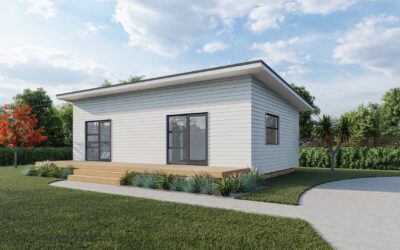
Small Transportable Homes NZ | Ezyline Homes
Discover quality transportable homes for rural, urban, or coastal sites. Enjoy smart layouts, durable finishes, and a 10-year structural warranty – tailored to your needs.
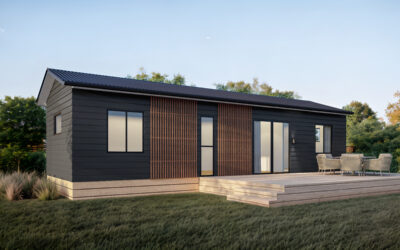
How to Read and Compare Transportable Home Plans Like a Pro
Looking at transportable home plans seems easy peasy at first glance, that is, until you try to compare them. Floor plans show rooms, dimensions, and layouts, but it can be hard to imagine what it will be like to live in day to day. Understanding...
Can I Have a Granny Flat on my Property in NZ? Rules, Options & Benefits
One of the most common questions that comes through our inbox is “can I have a granny flat on my property?” And while the answer is usually yes, it will always depend on your site, how the home is built, and your council. What’s allowed in one part...
Keep up-to-date with what’s happening at Ezyline Homes, as well as relevant industry news.
Frequently asked questions (FAQs)
What is the difference between an Ezyline home and a tiny home/pod home?
Tiny/pod homes are typically much smaller in size. They are typically constructed of panels of various types including polystyrene and metal skin panels. They have a distinct shipping container look to them. Ezyline homes start at 50m² and are more traditional in their design.
How does a prefab/prebuilt or modular home differ from a traditionally constructed home that is built onsite?
Prefab/prebuilt or modular homes differ from traditionally constructed homes because they are constructed in an offsite manufacturing facility and then transported to your site either fully assembled, in sections or modules, or as a kit so that it is then assembled on your site.
Depending on the type of prefab/prebuilt or modular homes you chose, many of the same materials are used in construction of the home as one built onsite.
Prefab/prebuilt or modular homes often have a timber floor construction. Traditionally constructed homes are built onsite from the ground up and often with a concrete foundation and concrete floor slab.
Find out more about the various prefabricated construction methods in our recent blog.
Can you help with tight, steep difficult sections?
Yes, with our trusted network of professionals we can view the site and give our recommendations.
Ready to take the next step?
Stay in the loop
Keep up to date with what’s happening at Ezyline Homes